
Vapor Barrier Installation in Apex, NC
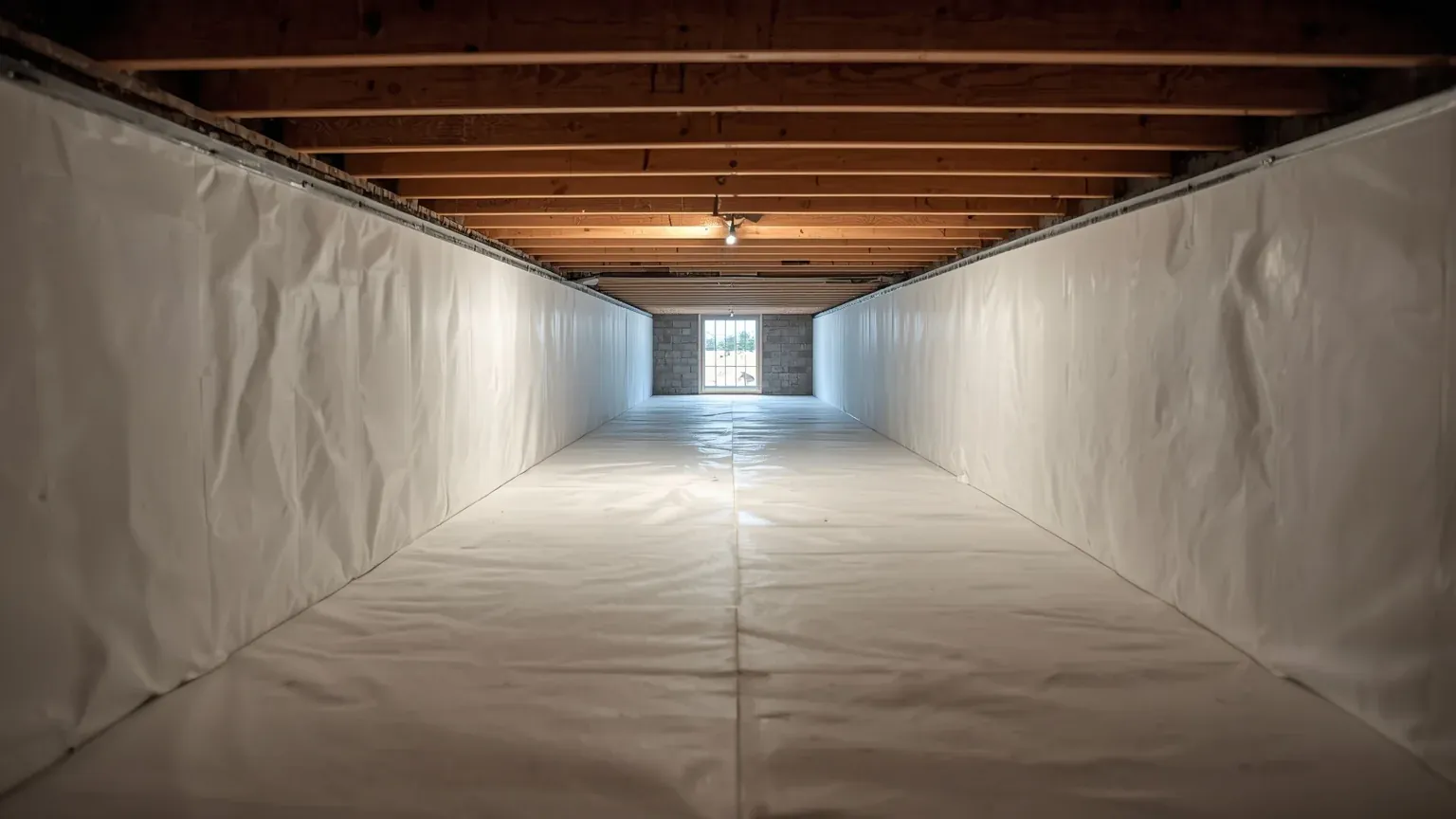
A vapor barrier covers the ground and nothing else. That is a narrower scope than encapsulation, it costs accordingly, and the two get sold under the same word often enough that it is worth being precise about which one a quote describes.
Who handles vapor barrier installation in Apex, NC?
Apex Crawl Space Solutions arranges vapor barrier installation across Apex and southwestern Wake County — a code-specification liner over exposed earth, properly lapped and terminated, either standalone or as the first stage of a sealed crawl space. Call (919) 343-5451 to arrange an evaluation.
What covering the ground achieves
Exposed earth releases moisture upward continuously. There is no leak to find and no event to notice — it simply runs, in every season, and on clay that holds water rather than shedding it, it runs for a long time after each rain.
A liner interrupts that path. What it does not do is address air arriving through the vents, which in this climate is usually the larger share. Covering the ground in a still-vented crawl space removes one source and leaves the other running — frequently still worth the money, but not the same thing as sealing the space.
The published specification
R409.2.1 sets a minimum 6-mil polyethylene vapor retarder or equivalent, installed to cover all exposed earth, with joints lapped not less than 12 inches. That is the number to hold a quote to.
Heavier reinforced liners are widely used and survive foot traffic far better — but the extra thickness buys puncture resistance, not better vapor performance. A contractor selling liner weight as a moisture upgrade is selling the wrong benefit.
Where liner runs up the walls, R409.2.2.1's 3-to-4-inch termite inspection gap applies exactly as in a full encapsulation. A vapor barrier is not a reason to bury the foundation wall.
Loose sheeting is a different product
The cheapest version of this is polyethylene laid over the dirt and left. It beats bare earth. It is not what a specified installation looks like, and the difference shows up in about five years.
What separates them: seams lapped to the code minimum and actually sealed rather than merely overlapped; mechanical fastening at the wall termination instead of tucking; cut and sealed around every pier rather than worked around; and enough material weight that a plumber crawling through does not open it up.
When it is genuinely enough
Where the ground is the only source — bare earth, no standing water, decent clearance, framing reading normal, and no history of summer humidity upstairs — ground cover can be the entire job and spending more is spending more.
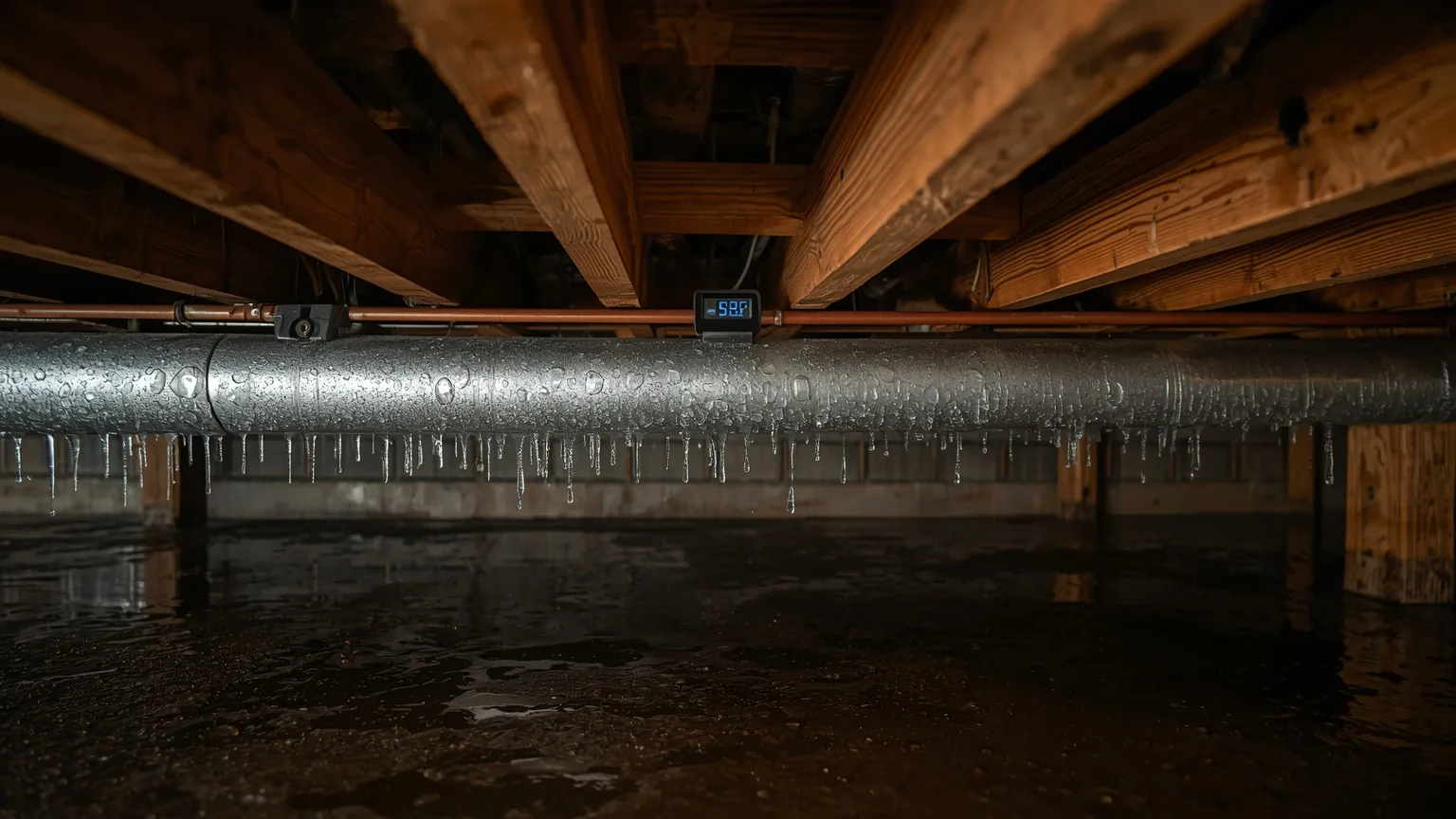
Where humid air is condensing on cool surfaces, it is a partial measure by definition. Moisture control covers how to establish which of those you are actually dealing with before buying either.
Why bare ground stays wet longer here
Apex sits within the Durham Triassic Basin, where mudstone and siltstone tend to weather into dense, slow-draining clay. Clay holds water near the surface rather than letting it move down and away, which means exposed earth in a crawl space here stays an active moisture source for far longer after rain than sandier soils would.
That is the specific mechanism a ground liner interrupts, and it is why covering the earth earns its cost even in a crawl space that has never held standing water.
Vapor Barrier Installation questions
What thickness does North Carolina require?
R409.2.1 sets 6-mil polyethylene as the minimum over exposed earth, with joints lapped at least 12 inches. Treat that as a floor rather than a target — heavier reinforced liners hold up far better under foot traffic, though the benefit is durability rather than vapor performance.
Is this the same as encapsulation?
No. A vapor barrier covers the ground. Encapsulation covers the ground, seals the vents and rim joist, and adds a means of drying the sealed space. Different scopes, different prices — which is exactly why a quote should say which one it is rather than using the word loosely.
Does it help on clay specifically?
Arguably more than on sandy ground. Dense clay retains water near the surface for longer after rain, so exposed earth stays a live moisture source well after the weather has passed. Covering it interrupts that for the whole season rather than for a few days.
Can I do it myself?
In a space with reasonable clearance, physically yes. What separates a lasting install from a temporary one is the detailing — sealing seams, terminating properly at the wall, cutting in around piers. Those are also the parts that are genuinely unpleasant to redo in an 18-inch crawl space.
Related crawl space services
Crawl Space Encapsulation
Sealing the space and drying it — after the water question has been settled.
Crawl Space Moisture Control
Which of four sources you actually have — and therefore what you should buy.
Crawl Space Cost
What actually drives the figure, and the six questions that make quotes comparable.
Crawl Space Waterproofing
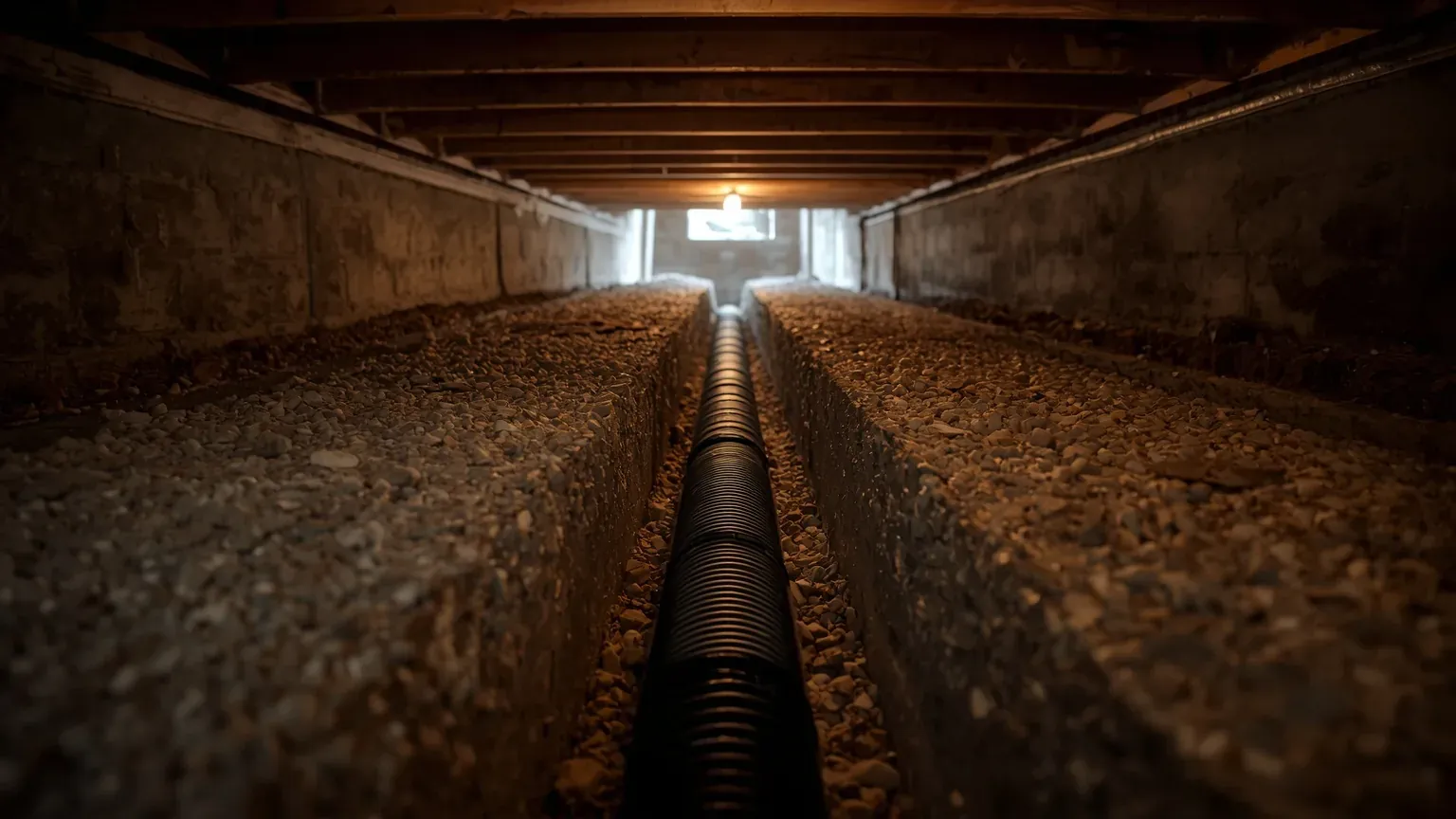
Liquid water on ground that will not absorb it — found, then stopped, before anything is sealed.
Find out what is actually causing it.
Someone under the house, moisture readings taken, and the scope written down before a price is attached.