
Crawl Space Encapsulation in Apex, NC
Encapsulation closes a crawl space off from the ground and the outside air, then manages the humidity of what remains. On Apex's heavy clay it is frequently the right answer — but only after the question of liquid water has been settled, because a liner laid over a wet floor solves nothing and hides everything.
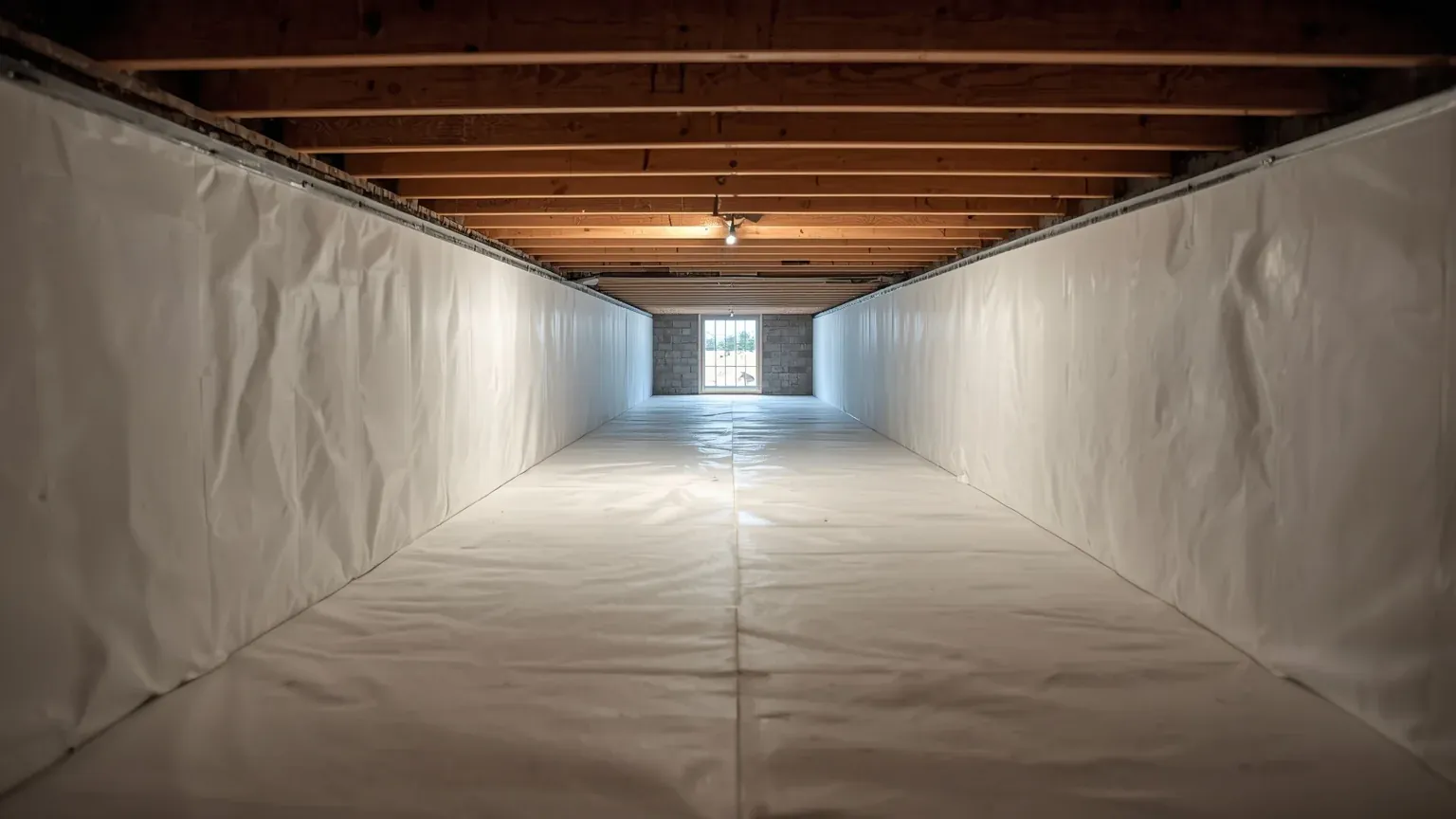
Who handles crawl space encapsulation in Apex, NC?
Apex Crawl Space Solutions arranges crawl space encapsulation across Apex and southwestern Wake County — ground and wall liner, sealed vents and rim joists, drainage first where liquid water is present, and a mechanical drying method that satisfies NC Residential Code R409. Call (919) 343-5451 to arrange an evaluation.
The four parts of a complete job
Two honest contractors can quote the same word and be thousands apart, because encapsulation describes a range of work rather than one defined scope. A complete installation has four parts, and a quote missing any one of them is quoting a smaller job.
The ground gets covered with a continuous liner, seams lapped and sealed, carried up the foundation walls to a proper termination. The openings get closed — foundation vents sealed, rim joist air-sealed. Where liquid water reaches the space at all, drainage goes in first. And the sealed space is given a means of drying, which is not optional here.
What R409 fixes, and why that helps you
North Carolina writes closed crawl spaces into residential code at Section R409 — not the R408 the International Residential Code uses, which is worth knowing before you compare a contractor's spec sheet against something found online.
R409.2.1 sets a 6-mil minimum liner over exposed earth with joints lapped at least 12 inches, requires the floor graded to one or more low spots with a drain to daylight or a sump pump at each, and requires crawl space drains to be kept separate from roof gutter and foundation perimeter drains.
Two more clauses separate a finished job from a started one.
- The termite inspection gap. R409.2.2.1 — at least 3 inches and no more than 4 between the top of the wall liner and the wood sill. Liner taken to the sill covers the exact surface an inspector reads, and it will not pass.
- A means of drying. R409.5 accepts a dehumidifier of 15 pints per day or more, a conditioned supply at 1 CFM per 30 square feet, or exhaust at 1 CFM per 50 square feet. Sealed with none of them, the space is an incomplete installation rather than a cheaper one.
Where clay changes the sequence
Apex sits within the Durham Triassic Basin, where mudstone and siltstone weather into dense clay that drains slowly. That has a direct consequence for the order this work happens in.
On free-draining ground, water that arrives at the foundation often keeps going down. On this clay it does not — it moves laterally instead, along the seam between backfill and undisturbed soil or straight along the footing, and it arrives at the crawl space. Which is why sealing an Apex crawl space before establishing whether it takes liquid water is a genuine risk rather than a theoretical one.
The order that works: settle the water question, then cover the ground, then close the openings, then dry what is left.
When it is not the answer
A crawl space with standing water needs drainage first — encapsulation second, as a separate stage.
A genuinely dry crawl space with bare earth, adequate clearance and framing reading in a normal moisture range may only need ground cover. Paying for a full system there is paying for capacity you do not need.
And where framing has already been degraded, the structural repair comes first. Sealing around damaged joists preserves them at their current strength; it does not restore them.
What an evaluation has to produce
Someone under the house, not a look from the hatch. Moisture content readings on joists, girders and subfloor at multiple points. An assessment of where water enters, if it does. A note of whether any gas appliance is vented into the space, which constrains how it can be sealed. And a written scope in sequence with exclusions stated.
Those readings also become the baseline that tells you, a year later, whether the work did what it was sold to do.
Why the ground under Apex changes the order of work
Apex sits within the Durham Triassic Basin, a belt of mudstone and siltstone that tends to weather into dense, slow-draining clay. The North Carolina Geological Survey records shrink-swell clays through these basins — soil that expands when wet and contracts as it dries.
Two consequences follow for a crawl space. Water that cannot infiltrate moves sideways and arrives at the footing having never pooled anywhere visible. And soil that changes volume through the season moves whatever bears on it, which is why a support that has shifted is a more common find here than on stable ground.
Crawl Space Encapsulation questions
Does encapsulation work on heavy clay soil?
Yes, and clay is often part of the reason it is needed — dense soil holds moisture at the surface for far longer, keeping exposed earth a live source. What clay changes is the sequence rather than the suitability: because water moves sideways through it rather than down, the liquid-water question has to be settled before the space is sealed.
How long does the work take?
One to three working days for most jobs once they begin. Drainage is what extends it — that is a separate stage that has to be installed and proven before the liner goes down. Removing failed insulation adds time as well, since it has to come out and be hauled before anything is sealed.
Can I encapsulate part of a crawl space?
You can seal a section, but the benefit is limited because air and vapor move freely through the space. A partial liner in a large crawl space usually means paying for materials without getting the humidity control that justifies them. Where budget is the constraint, staging it in sequence — drainage now, sealing later — beats covering half the floor.
Will it stop the musty smell upstairs?
Usually, because that smell is crawl space air. Air moves upward through a house, so a meaningful share of what you breathe on the ground floor came from underneath it. Sealing the space and drying it removes the source. If the odor persists afterwards, something else is producing it and that is worth knowing.
Does a sealed crawl space still get termite inspections?
Yes, and the code protects that access deliberately. R409.2.2.1 requires the 3-to-4-inch gap between the top of the wall liner and the sill plate so the foundation wall stays readable. Any contractor describing liner run to the sill is describing work that fails inspection.
Related crawl space services
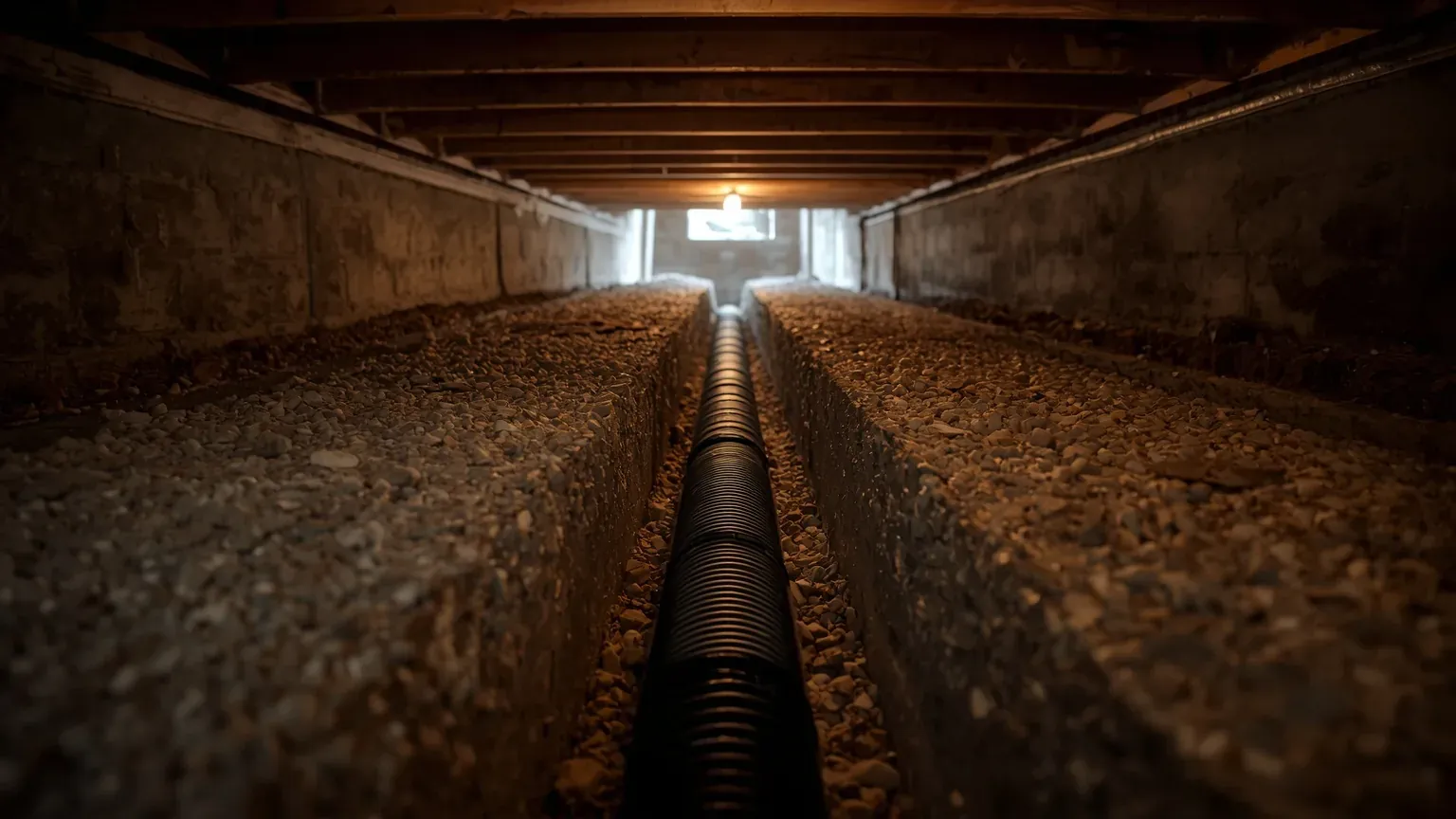
Crawl Space Waterproofing
Liquid water on ground that will not absorb it — found, then stopped, before anything is sealed.
Crawl Space Cost
What actually drives the figure, and the six questions that make quotes comparable.
Vapor Barrier Installation
The ground-cover job, to the R409 spec — narrower than encapsulation and priced that way.
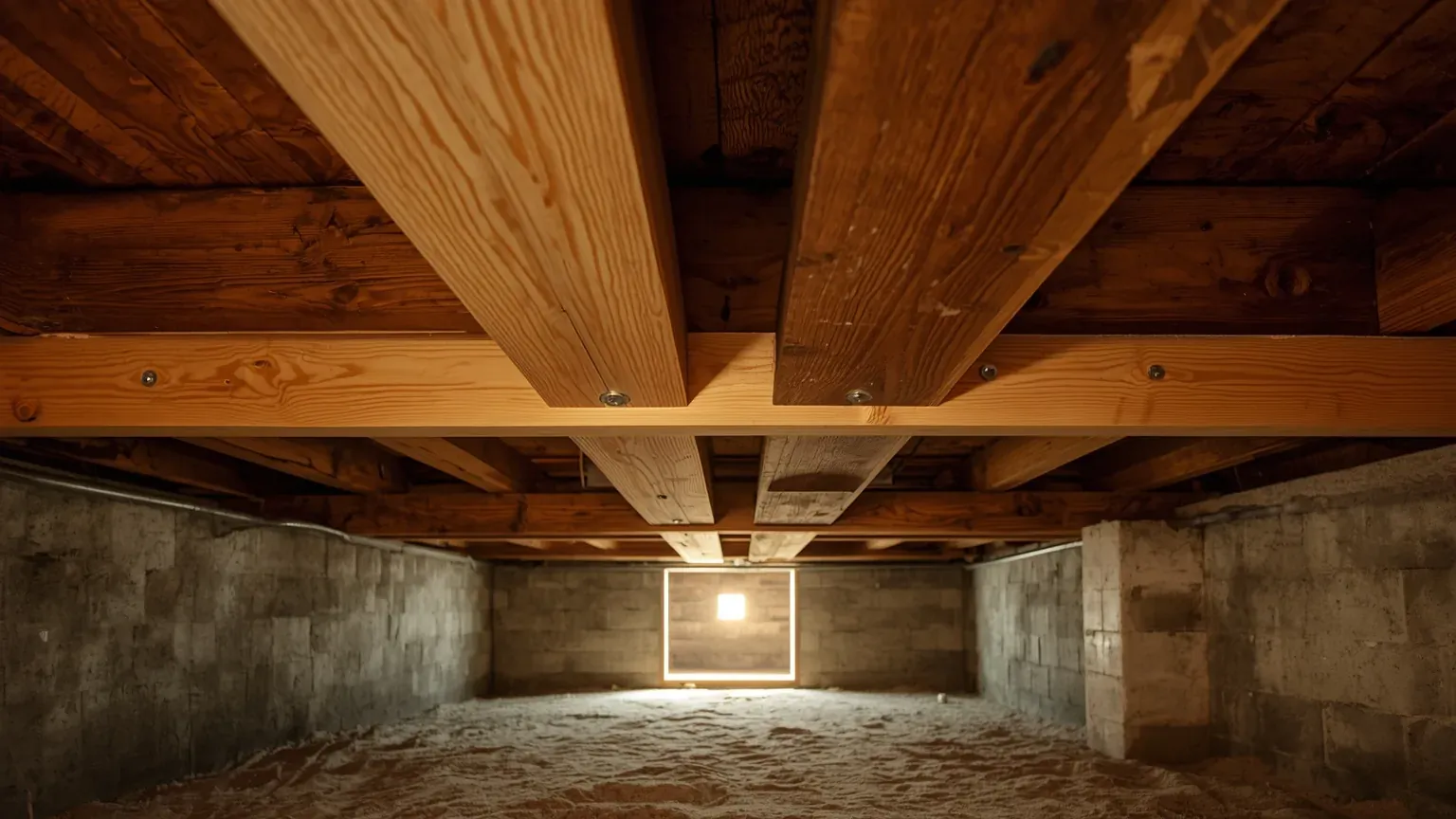
Crawl Space Repair
Settled supports and damaged framing — told apart before either is quoted.
Find out what is actually causing it.
Someone under the house, moisture readings taken, and the scope written down before a price is attached.